
InnoGreen strives to promote the well-being and coexistence of people and nature through nature-based solutions. In addition to traditional green solutions, the company’s products and services include refreshing outdoor green walls, modular green stops, and workshops that engage citizens.
Kekkilä-BVB is Finland’s leading manufacturer of substrate for green construction, but also a strong player in the circular economy of organic materials. Kekkilä offers its customers substrates for green construction from 17 soil stations across Finland, and the company processes organic waste into raw materials for green construction at its four composting plants.
Spolia Design is a company specializing in the reuse of demolished materials.

What kind of product or service is it?
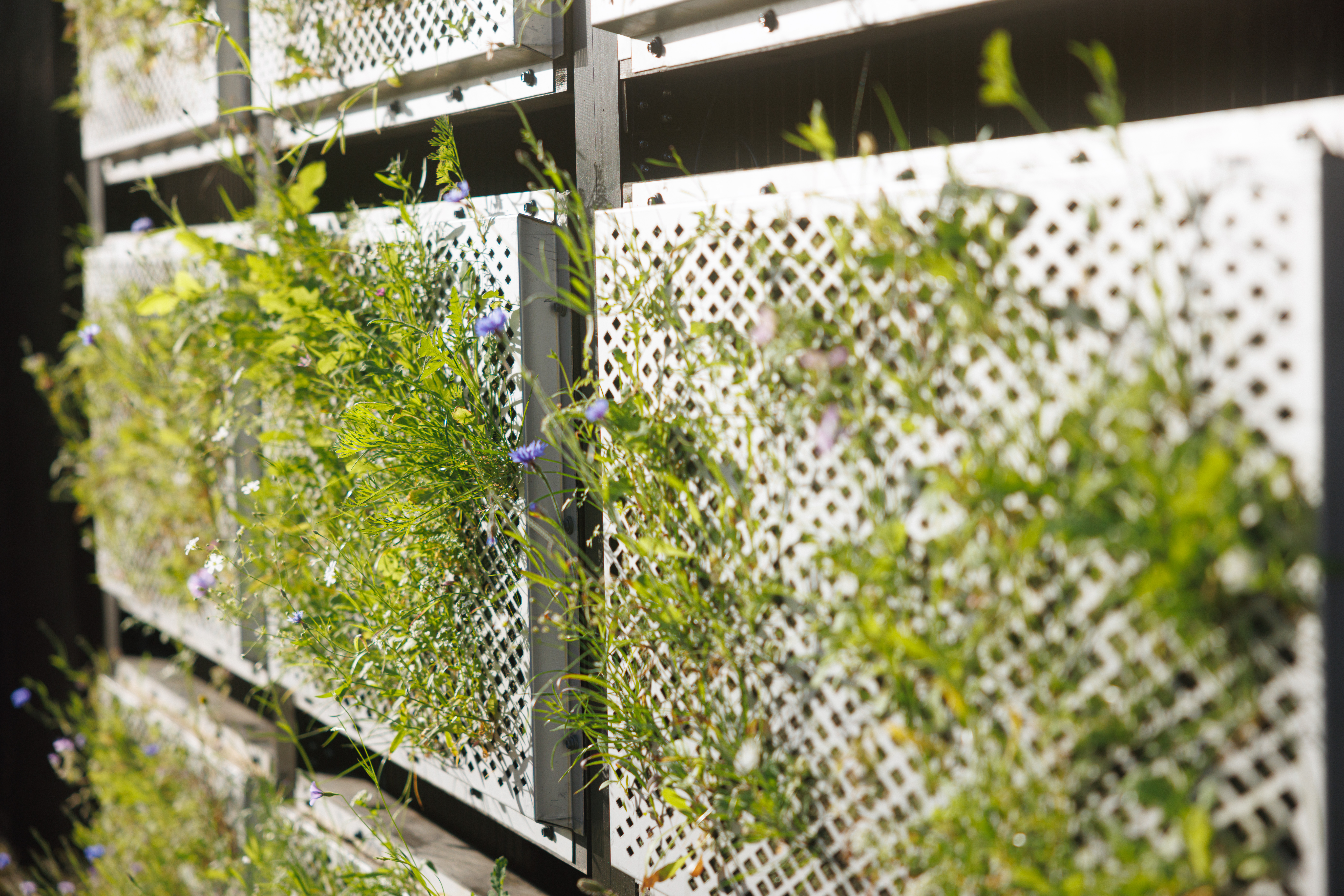
The biodiversity wall is a new type of plant wall constructed from materials salvaged from construction sites. This modular, easily modifiable structure brings vegetation to densely built-up urban areas and promotes material efficiency in green construction. In addition to the support structure, the wall’s growing medium also utilizes topsoil salvaged from construction sites. The wall’s vegetation consists of native pollinator plants that support local biodiversity.
InnoGreen, Kekkilä-BVB, and Spolia Design piloted the structure in 2025 as part of the Sustainable Espoo pilot program. The wall is now primarily offered as a rental product, with maintenance provided by InnoGreen.
The wall offers a new creative circular economy perspective on green construction and opens up a new discussion. Almost all of its materials, such as the main components, steel frames and wooden frames, are made from surplus construction materials sourced from the Helsinki metropolitan area. The selection of materials and the design of components minimise the amount of processing and transport required. In addition to material efficiency, the design of both the physical structure and the vegetation is determined by aesthetics, ease of maintenance, connections to local biodiversity, and year-round suitability for the northern climate.
How is the solution related to the circular economy?
Almost all of the materials used in the Biodiversity Wall are recycled and sourced from the Helsinki metropolitan area, including the wall’s growing medium. The selection of materials and design of components take into account the processing required and seek to minimise the energy used in this process. Efforts have also been made to minimise the environmental impact of transport – currently, the components originate from the Helsinki metropolitan area, but in the future, efforts will be made to further centralise their origin. In addition, the wall’s business model is linked to the sharing economy, as it is primarily offered as a rental product. The rental agreement includes expert maintenance of the structure and its vegetation, which extends the product’s life cycle and supports the ecosystem services it provides.